
Table of Contents
Introduction
If you’ve ever felt your chest tighten before a big presentation, or lain awake at night worrying about something that hasn’t even happened yet, you’ve already experienced how closely stress and anxiety can resemble one another. Most people use the two words interchangeably, but they aren’t the same thing, and understanding the difference can make a real difference in how you cope day to day. [Internal Link: Link to your mental wellness overview page] While stress is usually your body’s reaction to a specific, identifiable pressure a deadline, a fight with a friend, a financial worry anxiety tends to linger even after the original trigger has passed. Learning to tell them apart is often the first real step toward better stress and anxiety management, and it’s something a lot of people never get taught.

What Is Stress?
Stress is your body’s natural response to a demand or a threat. It’s what psychologists call the fight or flight reaction. Your nervous system gears up to help you handle whatever is in front of you, whether that’s a work deadline, a difficult conversation, or a sudden change in your routine. In small doses, stress is actually useful. It sharpens focus, gives you a burst of energy, and can push you to perform better under pressure. The trouble starts when stress becomes constant rather than occasional.
Common Causes of Stress
Everyday stress usually has a clear source. Work pressure, relationship conflicts, financial strain, health scares, or major life transitions like moving cities or starting a new job are among the most common triggers. Because stress is tied to an external event, it typically has a beginning and an end. Once the deadline passes or the argument is resolved, the stress response usually fades along with it.
Physical and Emotional Symptoms of Stress
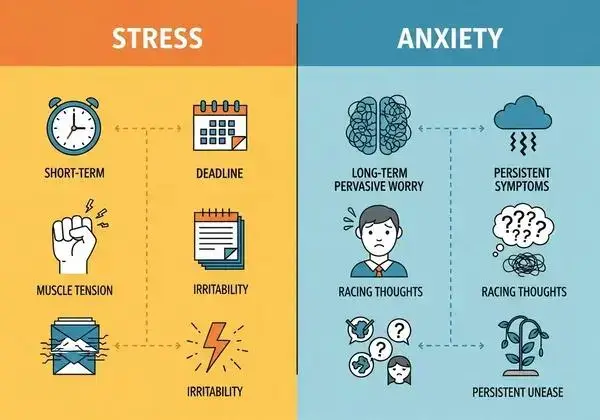
Stress shows up in the body as much as in the mind. You might notice a racing heart, tense shoulders, headaches, an upset stomach, or trouble falling asleep. Emotionally, stress can look like irritability, feeling overwhelmed, difficulty concentrating, or a short temper. Most of these symptoms ease once the stressful situation is behind you, which is one of the clearest signals that what you’re dealing with is stress rather than something more persistent.
What Is Anxiety?
Anxiety, on the other hand, is less about a specific external event and more about a pattern of worry, fear, or unease that can show up even when nothing is obviously wrong. It’s your brain’s alarm system firing even when there’s no immediate danger in front of you. Where stress tends to fade once the trigger disappears, anxiety often persists, sometimes without the person being able to point to exactly what’s causing it.
Common Causes and Triggers of Anxiety
Anxiety, on the other hand, is less about a specific external event and more about a pattern of worry, fear, or unease that can show up even when nothing is obviously wrong. It’s your brain’s alarm system firing even when there’s no immediate danger in front of you. Where stress tends to fade once the trigger disappears, anxiety often persists, sometimes without the person being able to point to exactly what’s causing it.
Physical and Emotional Symptoms of Anxiety
Many of the physical symptoms of anxiety overlap with stress, a racing heart, sweating, restlessness, and muscle tension are common to both. But anxiety often adds a layer of persistent worry, a sense of dread, difficulty controlling anxious thoughts, and physical symptoms like a churning stomach or shortness of breath that show up even in calm situations. When these symptoms show up regularly and start interfering with daily life, they may point toward an anxiety disorder rather than everyday nervousness, and that’s a distinction worth paying attention to when thinking about stress and anxiety as separate experiences.
Stress vs. Anxiety: Key Differences
The clearest way to separate the two is to look at three things: source, duration, and resolution. Stress is almost always a response to an external pressure, while anxiety is more of an internal, ongoing state that can exist without a clear cause. Stress tends to be temporary, easing once the situation is resolved, whereas anxiety can persist for weeks or months, sometimes independent of what’s happening around you. And while stress usually resolves once the trigger is removed, anxiety often continues even after the stressful event has passed, which is why some people describe it as worry that won’t switch off. Recognising this pattern is genuinely useful, because it shapes how you respond practical problem-solving helps with stress, while anxiety often responds better to different coping tools altogether.
How Stress and Anxiety Overlap
It’s worth being honest that these two experiences aren’t always neatly separate. They share many of the same physical symptoms, and one can easily lead into the other. Chronic, unmanaged stress the kind that never really lets up can gradually tip into anxiety, especially if you don’t have healthy outlets for processing it. This is part of why so many people find the two hard to tell apart in the moment. The overlap doesn’t mean the distinction doesn’t matter, though; it just means both deserve attention rather than being brushed off as just stress or just worrying.
How to Tell If It's Stress or Anxiety
A useful way to check in with yourself is to ask whether your worry is tied to something specific and current, or whether it feels ongoing and hard to pin down. Stress usually has an obvious cause you could name if someone asked you right now. Anxiety, by contrast, often feels harder to explain a background hum of unease that doesn’t fully go away even when things are objectively fine. Paying attention to how long the feeling lasts, and whether it eases once the triggering event is over, can offer a fairly reliable clue about which one you’re experiencing.
When to See a Doctor or Mental Health Professional
Occasional worry and pressure are a normal part of life, and most people don’t need professional support to get through them. But there are moments when it’s worth reaching out for help rather than trying to push through alone:
- Your worry or stress feels constant and doesn’t ease even when circumstances improve
- It’s affecting your sleep, appetite, work, or relationships on a regular basis
- You’re relying on avoidance, substances, or unhealthy habits to cope
- Physical symptoms like chest tightness or panic-like episodes are becoming frequent
If any of this sounds familiar, a licensed therapist, counsellor, or psychiatrist can help you understand what’s going on and explore appropriate treatment options, which might include therapy, lifestyle adjustments, or in some cases medication. Getting an accurate read on your treatment options early on tends to make recovery faster and less overwhelming.
Practical Tips for Managing Everyday Stress and Anxiety
Simple, consistent habits often go further than people expect. Regular physical activity, even a short daily walk, helps regulate the nervous system and burns off some of the physical tension that builds up under pressure. Prioritising sleep, cutting back on caffeine, and building in short breaks during the day can also reduce how intensely your body reacts to pressure. Talking to someone you trust, whether that’s a friend, family member, or professional, is one of the most effective and underused tools for mental stress management. For many people, learning how to reduce stress and anxiety isn’t about eliminating every stressful situation but about building a toolkit that helps the nervous system settle back down more quickly after it’s been triggered.

Conclusion
At the end of the day, understanding the difference between the two isn’t just an academic exercise it changes how you respond when either one shows up. Stress tends to be your body’s reaction to something specific and passes once that pressure lifts, while anxiety can linger, sometimes without an obvious cause, and often needs a different kind of attention. Whether you’re dealing with short-term pressure or a more persistent sense of worry, recognising the pattern early makes it easier to respond in a way that actually helps. If you’re looking for personalised guidance or professional stress and anxiety treatment in Ahmedabad, the team at is Bliss Psycho Hypnosis here to help you find an approach that fits your life and your pace.