
Table of Contents
Introduction

Over the years, mental health treatment has changed a lot. Today, when someone reaches out for help with anxiety, depression, panic attacks, or constant intrusive thoughts, medication is often one of the first things discussed. And honestly, for many people, it does help. It can lift the heaviness, improve sleep, and make intense emotions feel more manageable.
But after a while, a common question starts to come up. If the medicine is controlling the symptoms, why do those symptoms sometimes come back once it’s stopped? And why do some people still feel stuck even while taking it?
That’s where Cognitive Behavioural Therapy enters the picture. While medication works mainly by adjusting brain chemistry, cognitive behavioural therapy looks at the way we think and behave and the patterns that often sit at the root of emotional distress. For many people, learning how to change those patterns creates deeper and longer-lasting improvement. When you understand how both approaches work, it becomes clearer why therapy can lead to more sustainable results over time.
In this article, you’ll learn how depression impacts your thinking, how therapy works in simple terms, and the real-life benefits that can help you slowly regain control and feel like yourself again.
What Is Depression? Understanding More Than Just Sadness
Depression is more than just having a bad day or feeling low for a while. It’s a real mental health condition that affects how you think, feel, and function every day. A person going through depression may feel sad for long periods, lose interest in things they once enjoyed, struggle with low energy, notice changes in appetite, have trouble sleeping, or feel worthless and hopeless.
Unlike normal stress or temporary disappointment, depression doesn’t just pass in a few days. It can stay for weeks or even months, slowly affecting work, relationships, and daily life. Many people blame themselves and think they’re not “strong enough” or not “trying hard enough.” But the truth is, depression changes the way the brain processes thoughts and energy, making even simple tasks feel overwhelming.
Understanding that depression is a health condition, not a personal failure, is often the first and most important step toward healing and getting the right support.
What Is Cognitive Behavioral Therapy? A Simple Explanation
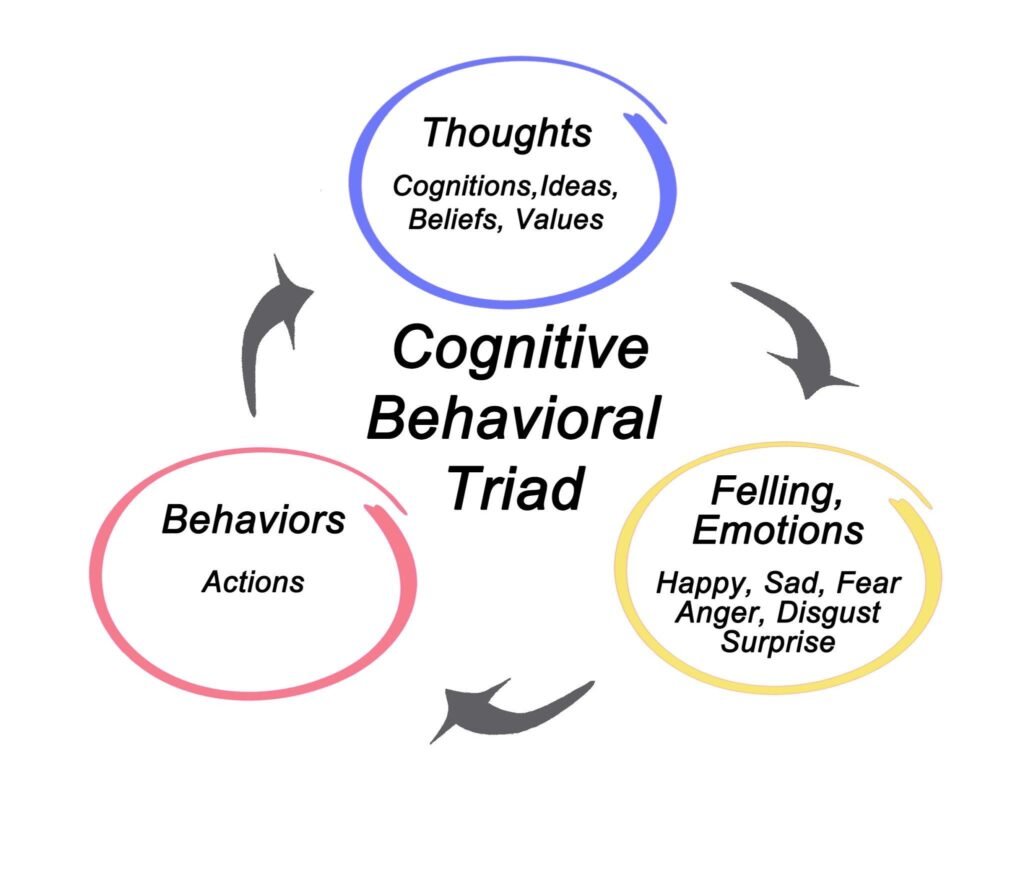
Cognitive behavioral therapy is a structured type of talk therapy that focuses on the link between your thoughts, feelings, and actions. Psychiatrist Aaron T. Beck developed it, and it has become one of the most trusted and researched methods in modern psychology and psychotherapy.
The basic idea is simple:
- Your thoughts affect how you feel
- Your feelings affect how you act
- Your actions can strengthen the thoughts you started with
When someone is dealing with depression, negative thoughts often become automatic. They pop up quickly and repeatedly, without being questioned. Over time, these patterns increase emotional pain and lead to withdrawing from activities that once felt meaningful. Cognitive behavioral therapy helps by identifying these unhelpful thinking patterns and gently challenging them. The goal is to replace distorted thoughts with more balanced and realistic ones.
It is practical, focused, and structured. Sessions usually work toward clear goals, and people learn specific tools and techniques they can continue using in daily life, even after therapy is completed.
How Depression Affects Thinking Patterns
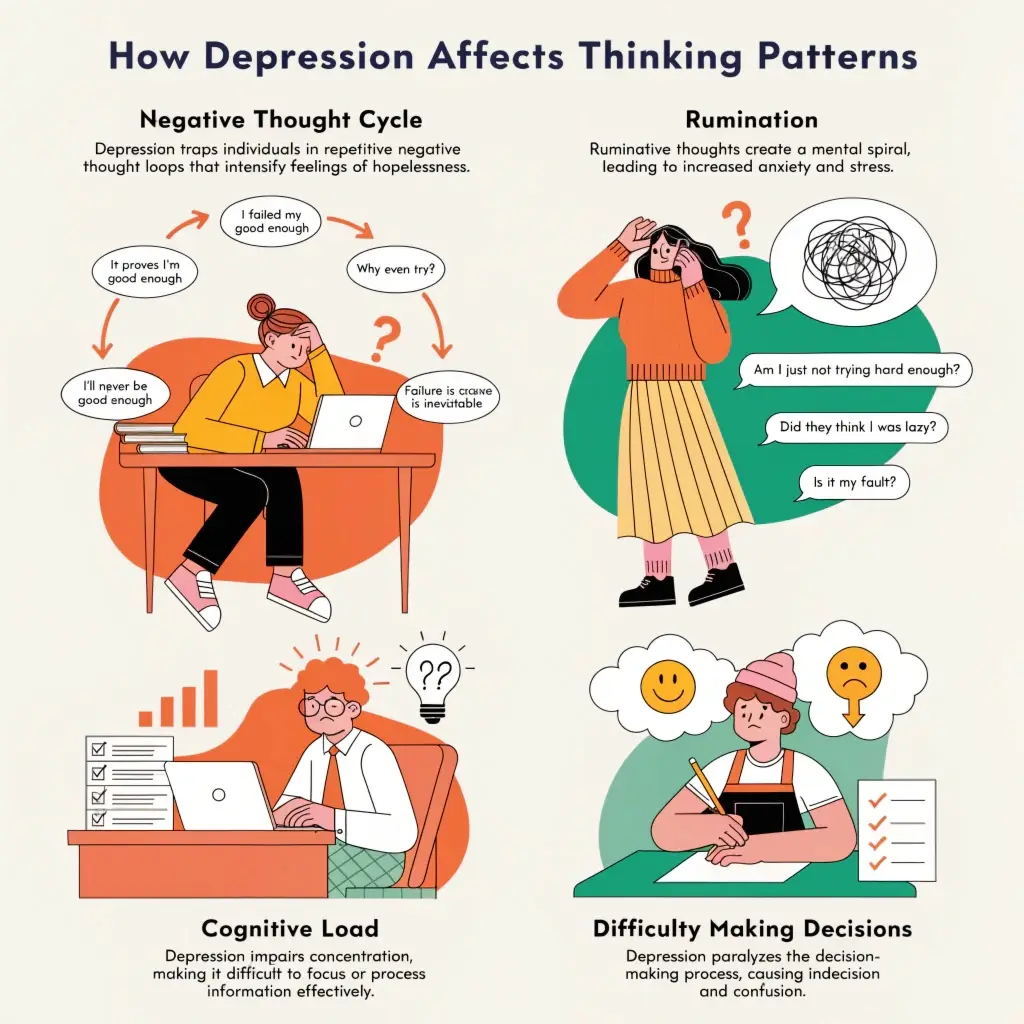
Depression doesn’t only change how you feel it also changes how you think. It can affect the way your brain interprets situations, conversations, and even small everyday events. Many people start developing what mental health professionals call “cognitive distortions.” In simple words, these are thinking unfair patterns, overly negative, or not fully based on facts.
Some common patterns look like this:
- Seeing things in black and white, with no middle ground
- Taking one negative experience and believing it defines everything
- Being overly harsh or critical toward yourself
- Expecting the worst outcome, even without clear evidence
Key Benefits of Cognitive Behavioral Therapy for Depression
Helps Identify and Challenge Negative Thoughts
One of the biggest benefits of cognitive behavioral therapy is that it helps you become more aware of your thoughts. Many people don’t even realize how harsh or critical their inner voice has become. Negative self-talk can run in the background all day without being noticed. Through guided discussions and simple exercises, you slowly start recognizing these automatic negative thoughts.
Once you notice them, you learn how to question them calmly. Is this thought actually true? Am I exaggerating the situation? Is there another way to look at this? By checking your thoughts instead of blindly believing them, the emotional intensity starts to reduce. Over time, this practice helps you build healthier and more balanced thinking habits.
Encourages Positive Behavioral Changes
Depression often makes people pull away from everyday life. Things that once felt normal going for a walk, meeting friends, working on a hobby start to feel exhausting or pointless. Slowly, people stop doing them. The problem is, the more someone withdraws, the more isolated and low they begin to feel. It becomes a cycle that’s hard to break.
Cognitive behavioral therapy uses a practical approach called behavioral activation. Instead of waiting to “feel ready” or motivated, you’re encouraged to take small, realistic actions first. The idea is simple: action can come before motivation. When you start doing small tasks consistently, your mood gradually begins to shift.
Even something as simple as stepping outside for fresh air or finishing one small responsibility can create a sense of achievement. These small wins build momentum, and over time, they help restore confidence and improve emotional well-being.
Improves Emotional Regulation
Feeling emotionally overwhelmed is very common in depression and can also overlap with anxiety and tension. Emotions can feel stronger than usual, sudden, or difficult to manage. Through structured sessions, cognitive behavioral therapy teaches simple and practical coping skills like changing unhelpful thought patterns, writing down feelings to understand them better, and using relaxation techniques to calm the mind and body.
With practice, people slowly learn how to handle their emotions in a healthier way instead of feeling controlled by them. Over time, this helps create more emotional balance and reduces sudden mood changes.
Builds Long-Term Coping Skills
Unlike some short-term fixes, cognitive behavioral therapy gives people tools they can use for the rest of their lives. These tools include:
- Learning to recognize unhealthy or distorted thinking patterns
- Practicing more balanced and realistic self-talk
- Setting small, achievable goals
- Building clear and practical problem-solving skills
Over time, these skills lower the chances of falling back into the same negative cycle and help build emotional strength. Gradually, a person learns how to guide themselves through difficult situations—almost like becoming their own mental coach—and handle future challenges with more confidence and clarity.
Restores a Sense of Control and Confidence
Depression often brings a deep sense of helplessness. Even small decisions can feel exhausting, and self-doubt can start showing up in almost every situation. Over time, this can make a person feel like they have no control over their own life. With regular sessions and steady practice, cognitive behavioral therapy slowly helps rebuild that sense of control.
As people begin to notice that changing their thoughts can positively affect their emotions, something shifts. They start to feel more capable. Confidence doesn’t return because life suddenly becomes perfect, but because they now have practical tools to handle challenges in a healthier and more balanced way.
Why This Approach Is Widely Recommended
Respected professional bodies like the American Psychological Association recognize cognitive behavioral therapy as an effective treatment for depression. It has been studied for many years, and research consistently shows that it helps people across different age groups and varying levels of depression.
One reason it is trusted so widely is because it is structured and based on evidence. Therapists use clear methods, monitor progress over time, and adjust techniques depending on how the person is responding. This step-by-step approach creates transparency and builds confidence, knowing that the treatment is supported by scientific research rather than guesswork.
What to Expect in a Therapy Session
Many people feel unsure about starting therapy because they don’t know what actually happens in a session. In reality, therapy is usually a supportive and practical process. It’s not just about talking while someone listens. A therapist works with you to understand your thought patterns, look at recent situations, and explore healthier ways to respond.
Sessions often include simple exercises, small reflection tasks, and clear goals to track progress. The aim is not only to discuss emotions but also to learn practical strategies that you can use in daily life. Over time, these tools help support steady and meaningful recovery.
When Should You Consider Seeking Help?
If feelings like constant sadness, lack of interest in things you once enjoyed, ongoing tiredness, or hopelessness continue for more than two weeks and start affecting your daily routine, it may be a good idea to seek professional help. Getting support early can make recovery smoother and prevent symptoms from becoming more intense.
Depression can be treated, and reaching out for help does not mean you are weak. In fact, choosing to seek support shows courage and a willingness to take care of your mental health.
Conclusion
Living with depression can feel exhausting and confusing, but healing is possible. Cognitive behavioral therapy provides clear guidance and practical tools that help you understand your thoughts and manage your emotions in a healthier way. Instead of feeling controlled by negative patterns, you slowly learn how to respond to them with awareness and balance.
By recognizing unhelpful thinking habits, building healthier daily routines, and strengthening emotional resilience, this approach supports long-term improvement. Real change happens step by step, and with the right support, it becomes easier to move forward with confidence.
If you or someone close to you is struggling, you don’t have to handle it alone. At Bliss Psycho Hypnosis, you can receive professional guidance in a safe and supportive environment. Taking that first step toward help could be the beginning of clarity, emotional balance, and renewed self-belief. You deserve care, understanding, and the chance to feel better again.