
Table of Contents
Introduction
Over the years, mental health treatment has changed a lot. Today, when someone reaches out for help with anxiety, depression, panic attacks, or constant intrusive thoughts, medication is often one of the first things discussed. And honestly, for many people, it does help. It can lift the heaviness, improve sleep, and make intense emotions feel more manageable.
But after a while, a common question starts to come up. If the medicine is controlling the symptoms, why do those symptoms sometimes come back once it’s stopped? And why do some people still feel stuck even while taking it?
That’s where Cognitive Behavioural Therapy enters the picture. While medication works mainly by adjusting brain chemistry, cognitive behavioural therapy looks at the way we think and behave and the patterns that often sit at the root of emotional distress. For many people, learning how to change those patterns creates deeper and longer-lasting improvement. When you understand how both approaches work, it becomes clearer why therapy can lead to more sustainable results over time.

Understanding Cognitive Behavioural Therapy
What Is Cognitive Behavioural Therapy?
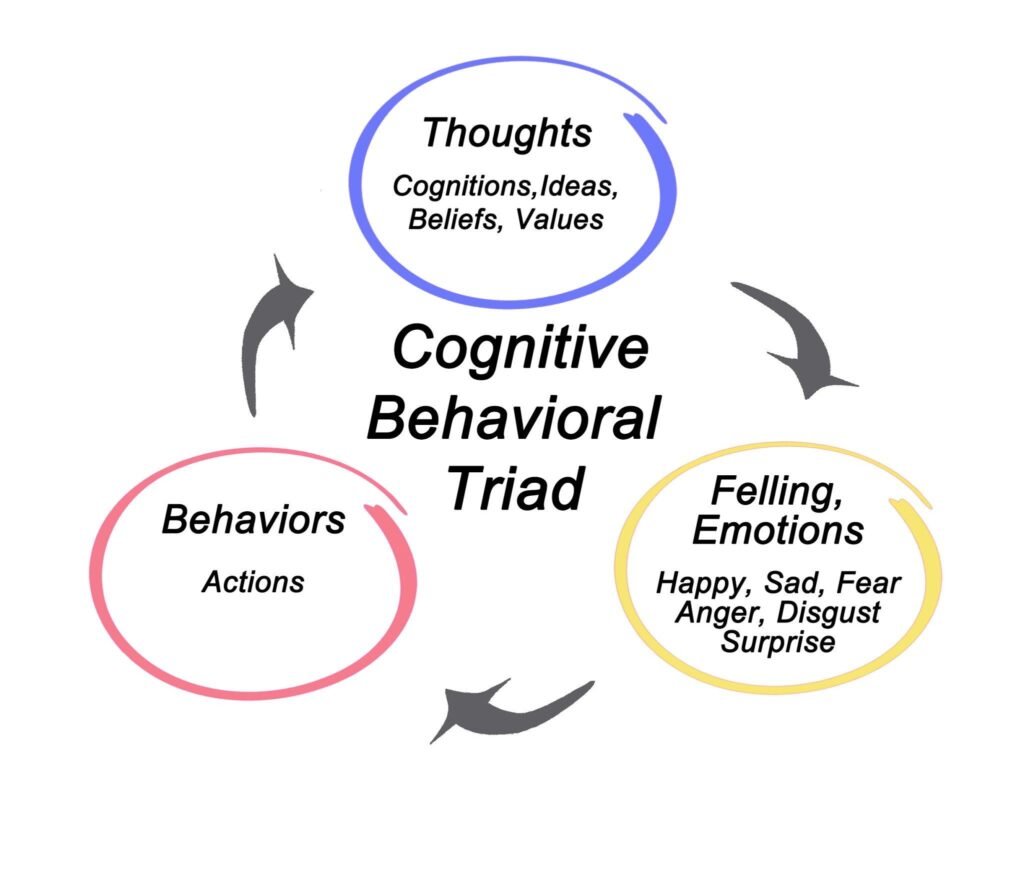
Cognitive Behavioural Therapy is a structured and goal-focused type of psychotherapy built on a simple but meaningful idea: the way we think affects how we feel, and how we feel affects what we do. When our thinking becomes overly negative or distorted, it can directly shape our emotions and behaviour in unhealthy ways.
Instead of spending years digging only into the past, this research-based approach focuses on what’s happening right now. It helps people notice their automatic negative thoughts, question whether those thoughts are accurate, and replace them with more realistic and balanced ones.
For example, someone dealing with anxiety might constantly think, “I’m going to fail” or “Something bad is about to happen.” Those thoughts create fear, which then leads to avoiding certain situations. The more someone avoids, the stronger the anxiety becomes. This therapy helps break that cycle by teaching practical techniques that change how a person interprets and responds to their thoughts.
Why It Is Structured and Practical
Unlike open-ended talk therapy, where conversations can flow in many directions, Cognitive Behavioural Therapy follows a clear and organized structure. Each session has a purpose. There are specific goals, practical exercises, and measurable progress. People don’t just talk about how they feel—they learn coping strategies, try small behavioural changes, and practice techniques in real-life situations between sessions.
This structured and practical approach is one of the main reasons it is strongly recommended by psychologists, psychiatrists, and mental health researchers across the world. It offers a clear path forward rather than leaving things vague or unstructured.
How Medication Supports Mental Health
The Role of Brain Chemistry
Medication for anxiety and depression works by adjusting certain chemicals in the brain, such as serotonin, dopamine, and norepinephrine. When these chemicals are better balanced, symptoms like persistent sadness, panic attacks, or intrusive thoughts can start to ease.
For people going through severe depression or intense panic episodes, medication can play a very important role. It can provide the stability needed to get through the day, return to routine activities, and regain a sense of emotional balance that might have felt completely out of reach.
The Limits of Symptom Management
However, medication mainly focuses on easing the symptoms rather than changing the thinking patterns behind them. It can lower the intensity of sadness, fear, or anxiety, but it doesn’t teach someone how to handle stress, manage emotions in healthy ways, or solve problems more effectively.
Reducing symptoms is important and sometimes absolutely necessary. But building long-term emotional strength usually comes from learning how to think differently and respond differently when challenges arise.
How Medication Supports Mental Health
Managing Emotional Intensity
Transforming Thought Patterns
Cognitive Behavioural Therapy goes beyond just easing emotions. It helps people notice patterns in their thinking, such as expecting the worst, seeing situations in extremes, or assuming one bad experience defines everything. Once these patterns are recognized, it becomes easier to see how certain thoughts may be increasing fear, stress, or sadness.
- Through structured and guided sessions, individuals learn to:
- Reframe negative thoughts in a more balanced way
- Gradually face fears step by step instead of avoiding them
- Manage emotions more effectively
- Develop healthier daily habits and responses
These are not short-term fixes. They are skills that stay with a person and continue supporting mental well-being for years to come.
Why Cognitive Behavioural Therapy Often Produces Longer-Lasting Results
Research in clinical psychology has repeatedly shown that people who complete cognitive behavioural therapy often have lower chances of relapse compared to those who depend only on medication. In other words, the improvements tend to last longer.
The reason is quite simple. Therapy focuses on building internal skills. Once someone learns how to manage their thoughts and reactions in healthier ways, those skills don’t disappear when the sessions end. They stay with the person.
Medication can be helpful, but if it’s stopped, its effects may fade. The coping tools and thinking strategies learned in therapy, however, continue to support recovery over the long term.
When the way you think begins to change, your emotional responses start to shift. As emotions shift, behaviours change too. And over time, those new behaviours can gradually reshape the direction of your life.
Emotional Autonomy and Confidence
Another reason many people feel drawn to cognitive behavioural therapy is the sense of control it gives them. While medication can be incredibly helpful—and in some cases life-saving—some individuals feel concerned about depending on it for a long time.
Therapy encourages emotional independence. It teaches people how to understand their own reactions and manage them in healthier ways, instead of relying only on something outside of themselves. Over time, this feeling of being able to handle your own emotions can build confidence and strengthen resilience.
That doesn’t mean medication isn’t important. In severe situations, it can play a vital role. But therapy provides practical skills that people can continue using on their own, long after sessions have ended.
When Combined Treatment Works Best
It’s important to make one thing clear—this isn’t about choosing one over the other. In many cases, mental health professionals actually recommend using medication along with cognitive behavioural therapy, especially for severe depression, obsessive-compulsive disorder, or during intense crisis situations.
Medication can help bring immediate relief and reduce overwhelming symptoms. Once things feel more stable, therapy can focus on changing unhelpful thinking patterns and building skills that lower the chances of relapse.
However, when we look at long-term results, research often shows that therapy by itself can create more lasting change than medication alone. The key difference is simple: medication helps manage symptoms, while therapy works toward transforming the underlying patterns.
Addressing Common Misconceptions
Therapy Takes Too Long
Medication Is the Only Scientific Option
Talking About Problems Makes Things Worse
The Deeper Reason It Works
At the heart of it, emotional pain often comes from the meaning we give to situations. Two people can go through the same experience, yet react in completely different ways depending on how they interpret it.
Cognitive Behavioural Therapy works because it helps change that interpretation.
When the way you think begins to shift, your emotions start to shift too. When emotions change, behaviours follow. And when behaviours change, the direction of your life can gradually change as well.
Medication may lower the intensity of distress. But Cognitive Behavioural Therapy works on the deeper level—it helps reshape the inner conversation that created that distress in the first place.
Final Thoughts
Mental health recovery isn’t about picking one side over the other. Both medication and therapy have real value, and both are supported by strong clinical research.
But when the focus is on building long-term emotional strength, preventing relapse, and feeling more in control of your own mind, cognitive behavioural therapy often creates deeper transformation. It doesn’t just ease symptoms for a while. It helps you develop practical skills. And those skills are what lead to lasting change.
If you’re exploring options for anxiety treatment or depression support, speaking with a qualified mental health professional about cognitive behavioural therapy could be an important step toward steady, long-term wellness. At Bliss Psycho Hypnosis, you can receive structured, evidence-based support designed to help you build resilience and move forward with confidence.