
Table of Contents
Introduction
Anxiety is something most of us go through at different stages of life. It can show up before an important meeting, after a medical test, during money problems, or when relationships feel uncertain. A certain level of anxiety is completely normal. In fact, it helps us stay alert and prepared when we need to handle something important.
The problem starts when that anxiety doesn’t switch off. When your mind keeps worrying even when there’s no real danger. When sleep gets disturbed, focus becomes difficult, and small tasks start feeling heavy. At that point, it’s not just everyday stress anymore—it’s something that needs care and attention.
A lot of people believe that medication is the only real option for treating anxiety. But many are surprised to learn that one of the most effective and well-studied treatments is actually a structured form of talk therapy called cognitive behavioural therapy.
CBT treatment has helped millions of people around the world understand why their anxiety happens and, more importantly, how to manage it in a practical and long-lasting way.

Understanding Anxiety Beyond “Overthinking”
Anxiety does not mean you are weak. It does not mean there is something wrong with your personality. And it is definitely not something you can control just by telling yourself to “calm down.”
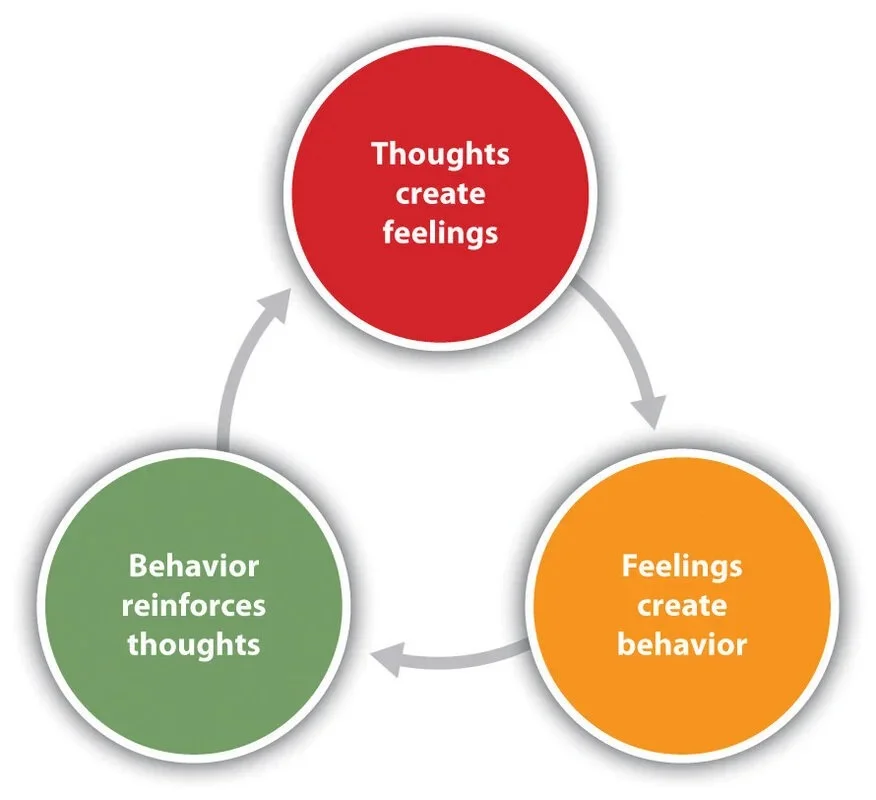
Anxiety usually works like a loop. Your thoughts affect your feelings, your feelings affect your body, and your body reactions affect what you do next. All of these parts keep feeding into each other.
For example, imagine you’re about to speak in a meeting and a thought comes up: “What if I mess this up?” That one thought can quickly create fear. Your heart may start beating faster. Your hands may feel sweaty. Your chest may feel tight. When you notice these physical changes, you start worrying even more. To avoid feeling embarrassed, you decide not to speak at all.
In that moment, staying quiet feels safer. But your brain learns that avoiding the situation helped you escape the fear. So the next time you’re in a similar situation, the anxiety shows up even stronger.
This is the cycle that cognitive behavioural therapy focuses on—helping you understand it and slowly change it in a safe and practical way.
What Is Cognitive Behavioural Therapy?
Cognitive Behavioural Therapy is a practical and structured type of talk therapy that looks at how your thoughts, feelings, and actions are connected. Instead of spending all the time only talking about the past, this CBT approach focuses more on what is happening in your life right now and teaches you useful tools to handle it better.
The basic idea behind this evidence-based therapy is simple. When you start noticing unhelpful or negative thoughts and learn how to respond to them in a healthier way, your emotions slowly begin to change. As your reactions change, your anxiety starts to feel more manageable.
For many years, research studies have shown that this structured therapy works very well for different types of anxiety problems, including generalized anxiety, panic attacks, social anxiety, and specific fears. Because of its strong scientific support, it is recommended by mental health professionals around the world as one of the most effective treatments for anxiety.
How Anxiety Develops Over Time
Anxiety usually starts as a natural safety response. Our brain is built to notice danger and protect us. But in anxiety disorders, this alarm system becomes too sensitive.
Situations that are actually safe begin to feel risky. The mind automatically jumps to worst-case scenarios. Over time, these negative thinking habits become strong. You may start imagining extreme outcomes, thinking others are judging you, or believing that one mistake means you are not capable.
Avoiding these situations may feel like relief, but it actually keeps the fear alive. When you avoid what scares you, you don’t get the chance to see that you can handle it. So the anxiety stays and often grows stronger.
This is where cognitive behavioural therapy works directly on these patterns. It helps retrain the mind and calm the nervous system step by step.
How Cognitive Behavioural Therapy Helps in Anxiety
Identifying Negative Thoughts
One of the first things this behavioural therapy does is help people notice their automatic thoughts. Many anxious thoughts happen so fast that they feel completely true. CBT techniques help slow that moment down. It allows you to see patterns like always expecting the worst, assuming you will fail, or thinking others are judging you.
When you clearly recognize these thought patterns, you begin to understand that thoughts are not always facts. Just becoming aware of this can already reduce some of the anxiety.
Challenging Irrational Beliefs
After noticing anxious thoughts, this cognitive therapy approach teaches you how to question them in a logical way. Instead of instantly believing every fearful thought, you learn to look at the actual evidence.
You ask yourself whether there is real proof behind the fear or if your mind is exaggerating. You consider other possible explanations and try to see the situation in a more balanced way. Over time, this weakens unrealistic fears and reduces intense anxiety reactions.
Exposure Therapy
Avoiding situations that make you anxious may feel like relief in the moment, but it keeps anxiety strong. When you avoid something, your brain never learns that you can handle it.
CBT treatment uses gradual exposure to change this. You face your fears step by step, in a safe and controlled way. As you slowly confront these triggers, your nervous system adjusts. With repeated exposure, the fear response becomes weaker.
Relaxation and Coping Skills
Anxiety is not only in your thoughts—it shows up in your body too. A racing heart, tight muscles, and shallow breathing can make fear feel worse. This anxiety therapy approach teaches practical techniques to calm these physical reactions.
Simple methods like deep breathing, grounding exercises, and journaling help settle the nervous system. When your body feels calmer, your emotional intensity naturally reduces.
Behavioural Activation
Anxiety often causes people to withdraw and avoid activities. Over time, this lowers confidence and strengthens fear. Behavioural activation, an important part of CBT techniques, encourages slowly returning to meaningful activities.
By taking small, manageable steps toward situations you once avoided, you rebuild confidence. Staying engaged helps reduce anxiety’s control and increases your sense of strength and capability.
What Happens During a CBT Session?
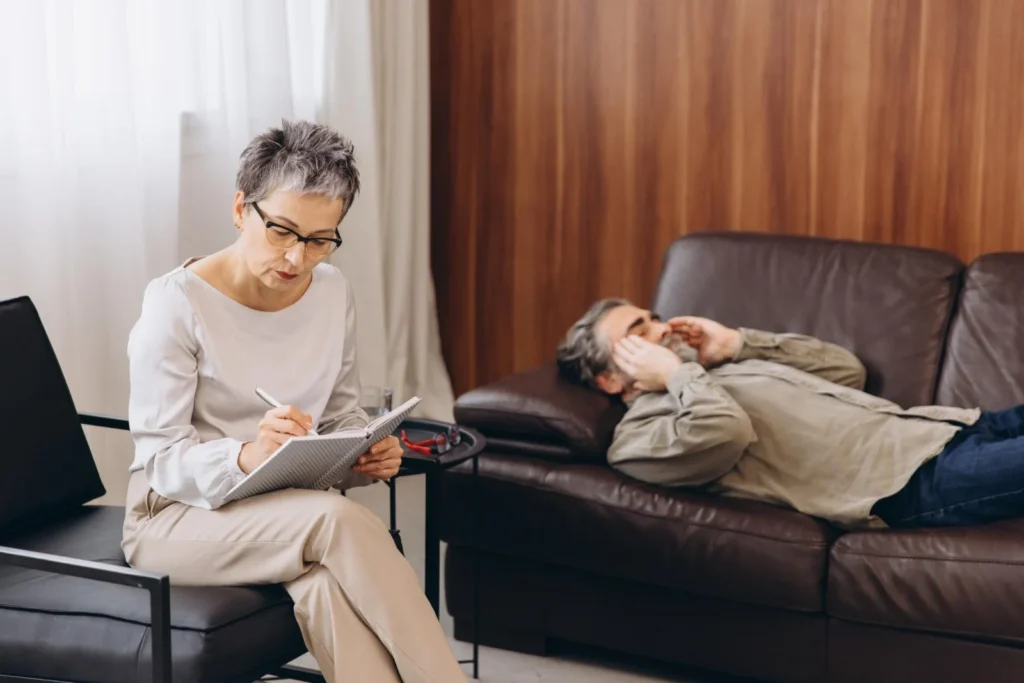
Many people feel nervous or confused about what actually happens in a therapy session. A typical session of cognitive behavioural therapy usually lasts around 45 to 60 minutes. It follows a structure, but it is also a two-way conversation. You and the therapist talk about what you’re currently struggling with, look at your thought patterns, and practice practical techniques that you can use in daily life.
Sometimes, the therapist may suggest paying attention to certain situations between sessions. These are not heavy assignments but simple reflections or small exercises to help you apply what you’re learning.
The space in this psychological therapy process is safe and non-judgmental. The purpose is not to blame you for feeling anxious. The purpose is to understand your patterns and work together to slowly change them.
How Long Does Cognitive Behavioural Therapy Take?
The duration of cognitive behavioural therapy can be different for everyone. It depends on the person and how intense their anxiety is. Some people start feeling better within a few weeks, while others may need a longer period to see steady improvement.
In many cases, structured CBT programs last somewhere between 8 and 20 sessions. However, the number of sessions is not the only important factor. What really makes a difference is regular attendance and practicing the techniques in everyday life, not just during therapy.
Studies show that the benefits of this evidence-based therapy often continue even after sessions are completed because people retain the practical skills they have learned.
When Cognitive Behavioural Therapy May Be Helpful
Cognitive Behavioural Therapy may be especially useful if:
- Anxiety is affecting your work, sleep, or relationships.
- You find yourself stuck in the same negative thoughts again and again.
- You avoid certain situations because of fear.
- You are looking for practical tools that can help you in the long run.
If your anxiety feels very intense, does not go away, or comes with panic attacks or strong physical symptoms, it is important to seek professional evaluation.
Why Cognitive Behavioural Therapy Is Widely Trusted
Behavioural therapy is one of the most well-studied types of psychotherapy available today. Over the years, research has shown that it works effectively for people of different ages and backgrounds. Because of its strong scientific support, many clinical guidelines recommend it as a first-choice treatment for anxiety disorders.
Therapists who practice CBT go through specific training to make sure they use the techniques properly and responsibly. This strong research base and professional training are what make this behavioural therapy trusted and reliable.
Final Thoughts
Living with anxiety can feel draining. Even simple daily tasks can start to feel heavy and difficult. But the good news is that anxiety is treatable, and real change is possible.
Cognitive Behavioural Therapy does not offer quick fixes or instant perfection. What it does offer is clarity, structure, and practical skills that help you respond to fear in a healthier way. It helps you understand what is happening inside your mind and teaches you how to manage it step by step.
As you begin to see how your thoughts affect your emotions and actions, the cycle of anxiety slowly starts to break. Gradually, confidence builds. Fear feels less intense. Daily life becomes easier to handle.
With the right guidance and regular effort, this structured CBT approach can help you feel more in control and emotionally stronger.
If anxiety is affecting your life and you are ready to take the first step toward change, the team at Bliss Psycho Hypnosis is here to support you. Reach out today and begin your journey toward a calmer and more balanced life.