
Table of Contents
Summary
This guide is created to explain this therapy in a clear and easy way. It will help you understand what it is, how it works, and why so many mental health professionals trust and recommend it. If you are just beginning to learn about mental health care, this article is here to guide you gently without making things feel complicated or overwhelming.

Introduction
Mental health struggles are something many people experience, even if they don’t always talk about them openly. Stress, anxiety, constant overthinking, low mood, and emotional tiredness can slowly start affecting the way we think, feel, and handle everyday situations. When looking for reliable and practical support, many people come across cognitive behavioral therapy as a helpful option.
What Is Cognitive Behavioral Therapy?
Cognitive Behavioral Therapy is a practical and structured therapeutic approach that emphasizes the interconnectedness of our thoughts, emotions, and actions. The basic idea is simple: the way we think about a situation plays a big role in how we feel and how we react.
Instead of spending too much time on the past, this approach focuses on current problems and real-life situations. It helps people become aware of negative or unhelpful thinking patterns, understand how these thoughts affect their emotions, and gradually replace them with more balanced and realistic ways of thinking. This makes it easier to cope with daily challenges in a healthier and more confident way.
The Core Concept Behind CBT
At its core, Cognitive Behavioral Therapy is based on the idea that our problems are not created only by what happens to us but by the meaning we give to those situations. Two people can go through the same experience yet react in entirely different ways, simply because their way of thinking is different.
For instance, one person might look at a mistake as a chance to learn and grow, while another might see the same mistake as a sign of failure. When negative interpretations keep repeating over time, they can slowly affect emotions and lead to unhealthy habits or behaviors.
How Cognitive Therapy and Behavior Change Are Connected
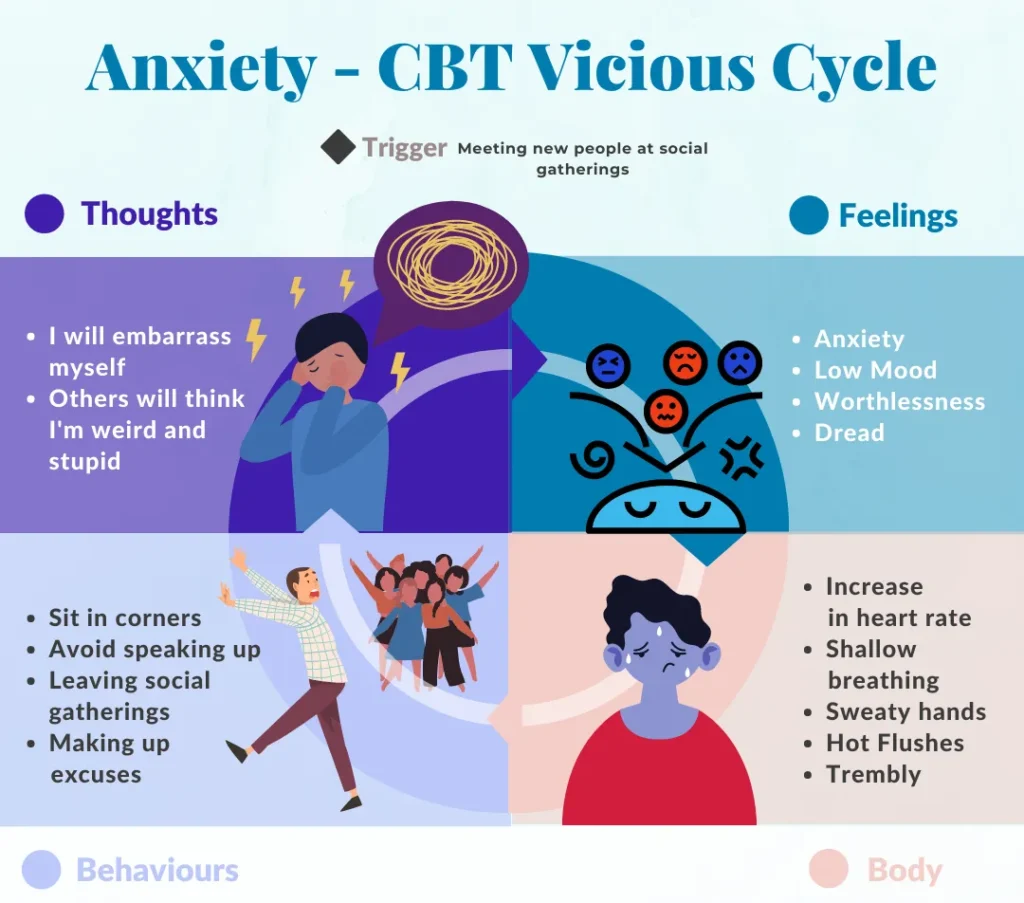
Thoughts Shape Emotions
Many thoughts come to our mind automatically, without us making any effort. These thoughts are often negative, self-critical, fearful, or unrealistic. When this kind of thinking repeats every day, it can slowly increase feelings like anxiety, sadness, or constant frustration.
Emotions Influence Actions
The way we feel has a strong impact on how we act. Fear can push us to avoid situations, low mood can make us pull away from people or activities, and stress can make us more irritable. Over time, these emotional reactions can turn into fixed behavior patterns.
Actions Reinforce Thoughts
Our actions can also strengthen our beliefs. Avoiding a situation may provide short-term relief from anxiety, but in the long run, it makes fear stronger. The mind starts believing that avoidance is necessary. This ongoing cycle is where cognitive behavioral therapy helps by breaking unhelpful patterns and guiding healthier responses.
How Cognitive Behavioral Therapy Works in Practice
In a structured and supportive environment, cognitive behavioral therapy encourages people to take an active role in improving their mental well-being. Sessions usually focus on clearly identifying current problems, understanding thought patterns, and learning practical tools to deal with them.
Instead of solely discussing emotions, the primary focus is on developing practical skills that individuals can utilize in their daily lives. The aim is to help individuals become more confident and capable of managing challenges on their own over time.
Common Techniques Used in CBT
Thought Awareness
People learn to become more aware of the automatic thoughts that show up during stressful or emotional situations. Simply noticing these thoughts is an important first step toward making positive changes.
Cognitive Restructuring
Unhelpful or negative thoughts are gently questioned and looked at logically. Over time, these thoughts are replaced with more balanced and realistic ways of thinking.
Behavioral Activation
Small and manageable actions are encouraged to help improve mood and energy levels, especially during times of low motivation or emotional fatigue.
Exposure Techniques
People are slowly and safely exposed to situations they fear. This gradual approach helps reduce avoidance and builds confidence step by step.
These techniques are practical, easy to measure, and can be applied naturally in everyday life.
Conditions Where CBT Is Commonly Used
Cognitive Behavioral Therapy is commonly used to support a wide range of mental health concerns. Mental health professionals often recommend it for people dealing with anxiety, depression, ongoing stress, phobias, sleep problems, and low self-confidence.
It is also especially helpful for individuals who feel trapped in repetitive thought patterns or emotional reactions that start affecting their work, relationships, or personal development.
CBT vs Traditional Talk Therapy
Unlike open-ended counseling, Cognitive Behavioral Therapy follows a clear and structured approach. Each session usually has specific goals, a planned direction, and a way to track progress over time.
Traditional talk therapy often focuses on talking about feelings and looking back on past events. CBT, however, puts more emphasis on solving current problems, staying aware of present thoughts, and learning practical tools that can be used right away. While both approaches are helpful in their own ways, CBT is especially known for being time-focused and skill-based.
What to Expect in a CBT Session

During sessions, the therapist and the individual work together to understand the thoughts and emotional reactions that are causing distress. This shared exploration helps bring clarity and awareness to patterns that may not be obvious at first.
Homework exercises are often given as part of the process. These simple tasks help people apply what they learn in sessions to real-life situations, which strengthens progress between appointments. This collaborative approach builds confidence and encourages people to become more independent in managing their mental well-being.
Scientific Evidence and Effectiveness
Cognitive Behavioral Therapy is one of the most well-researched approaches in mental health care. Many studies have indicated that it can be effective for a wide variety of emotional and psychological challenges.
Psychologists, psychiatrists, and healthcare organizations around the world widely recommend it due to its clear structure and focus on measurable progress. This strong research backing makes it a reliable and trusted form of therapy.
Online vs In-Person CBT
With the growth of digital health platforms, cognitive behavioral therapy is now available in both online and in-person formats. Online sessions make therapy more accessible and convenient, especially for people with busy routines or those who live far from clinics.
Studies show that guided online CBT can be effective for many people when it is provided by trained and qualified professionals. Choosing between online or offline sessions usually depends on personal comfort, the seriousness of the concerns, and the level of support needed.
Who Can Benefit Most From CBT?
People who are open to self-reflection, willing to practice new skills, and actively participate in the process usually see the best results. CBT works especially well for those who are looking for practical ways to handle their challenges rather than just talking about them.
At the same time, it is important to understand that it is not an instant solution. Real progress takes time, consistency, effort, and proper guidance from a trained professional when required.
Benefits and Limitations
Benefits include:
- Practical tools for daily life
- Improved emotional regulation
- Long-term coping skills
Limitations include:
- Requires active participation
- Not always suitable for severe untreated conditions
- Results vary based on commitment
Long-Term Impact on Mental Well-Being
By improving self-awareness and emotional control, cognitive behavioral therapy helps build long-term mental strength. Many people continue to use the tools they learn even after therapy sessions are over, which makes it a lasting and practical approach to mental well-being.
Because it focuses on self-help skills, it encourages people to become more independent and confident in managing their mental health, rather than relying on therapy alone.
Conclusion
Cognitive Behavioral Therapy provides a clear and structured way to understand and manage mental health challenges using proven methods. It may not offer instant results, but it gives practical tools to better handle thoughts, emotions, and everyday behaviors in a healthier way.
If you are exploring mental health support for the first time, CBT can be a strong and supportive starting point. With the right professional guidance, you can understand whether this approach suits your personal needs and goals.
At Blisspsychohypnosis, expert support is available to help you take the first step toward better emotional well-being with clarity and confidence.